
Where Digital Transformation Should Start: A Roadmap for SMEs
· by Dao Van Mong, CEO · 7 min read
Most small and mid-size businesses thinking about digital transformation get stuck at one of two extremes: trying to digitize all operations at once, which means no department gets it done properly, or delaying indefinitely because they don't know where to start. Both cost more time than a roadmap split into clear phases.
Start from the biggest time sink, not the easiest win
The most common mistake is digitizing the easiest thing first — a nice-looking company homepage, say — while the real bottleneck sits in an internal process burning dozens of staff hours a week, like manually consolidating sales reports from spreadsheets across branches. Prioritizing the bottleneck that costs the most staff hours delivers measurable value in the first phase, making it much easier to get leadership buy-in for the phases that follow.
Four steps for the discovery phase
- List every process currently running manually or scattered across disconnected tools, no matter how small
- Estimate the weekly staff hours each process costs, including time spent fixing errors from manual mistakes
- Interview the people who actually do the work daily, not just managers — the process on paper and the process in practice usually diverge
- Rank by hours saved if digitized, and pick the top 1-2 bottlenecks as phase one
Split the roadmap into three-to-six-month phases
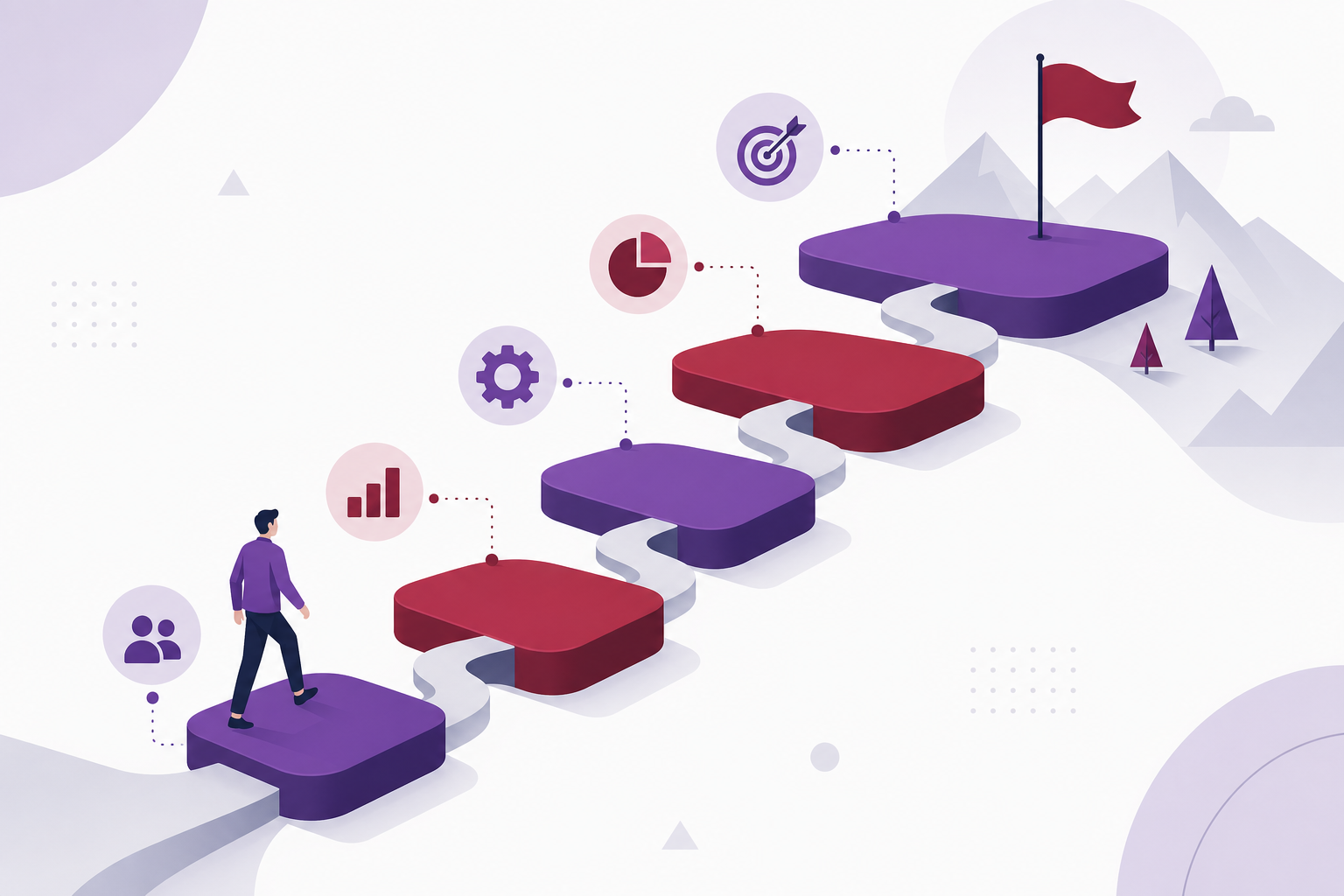
An effective digital transformation roadmap isn't a five-year plan — it's a sequence of short three-to-six-month phases, each putting exactly one system or module into real use. This structure keeps budget approved phase by phase instead of one large lump sum, which is easier for leadership to sign off on, and lets direction be adjusted based on results from the previous phase instead of locking everything in from day one.
The role of decision-level leadership
Digital transformation isn't something you hand entirely to the IT department while leadership waits for results. Decision-makers need to stay involved throughout, especially at phase transitions, to resolve process changes that touch multiple departments at once — something IT alone doesn't have the authority to decide.
Why staff resist, and how to handle it
Digitizing changes work habits built up over years, and it almost always meets quiet resistance even when nobody says so outright. Each phase should include a direct walkthrough with end users before rollout, explaining the concrete benefit to their daily work — not a generic benefit to the company — to reduce resistance upfront rather than dealing with it after rollout.
Frequently Asked Questions
Does a small business need an outside consultant, or can it do this alone?
It can be self-assessed if the internal team has someone objective enough with experience observing different operating models. Otherwise, an initial consulting session to pin down the right priority bottleneck is usually worth more than the cost of investing in the wrong system that doesn't solve the core problem.
What's the minimum budget for the first phase?
There's no fixed number — it depends on the scale of the bottleneck chosen. The principle is that phase one should be narrow enough to finish in three to six months with one concrete system or module actually running, not a spread-thin investment across many things at once.
How do you know if transformation is working or just costing money?
Agree on a few concrete, measurable metrics — like order processing time or accounting close time — before each phase starts, then compare after rollout. Without before-and-after metrics, there's no way to prove the investment's value to leadership.
The hard part of this roadmap is picking the right first bottleneck, and that has to be done with the people inside the process. How we survey and choose is described under digital transformation consulting.
About Cluvix
Cluvix Solutions builds custom enterprise software — ready-to-use products and tailor-made solutions built around your exact process.
Have a problem to discuss?
Tell us what you're dealing with. We reply within one business day.