
Build Your Own E-commerce Platform or Sell on Marketplaces: The Long-Term Cost Question
· by Dao Van Mong, CEO · 7 min read
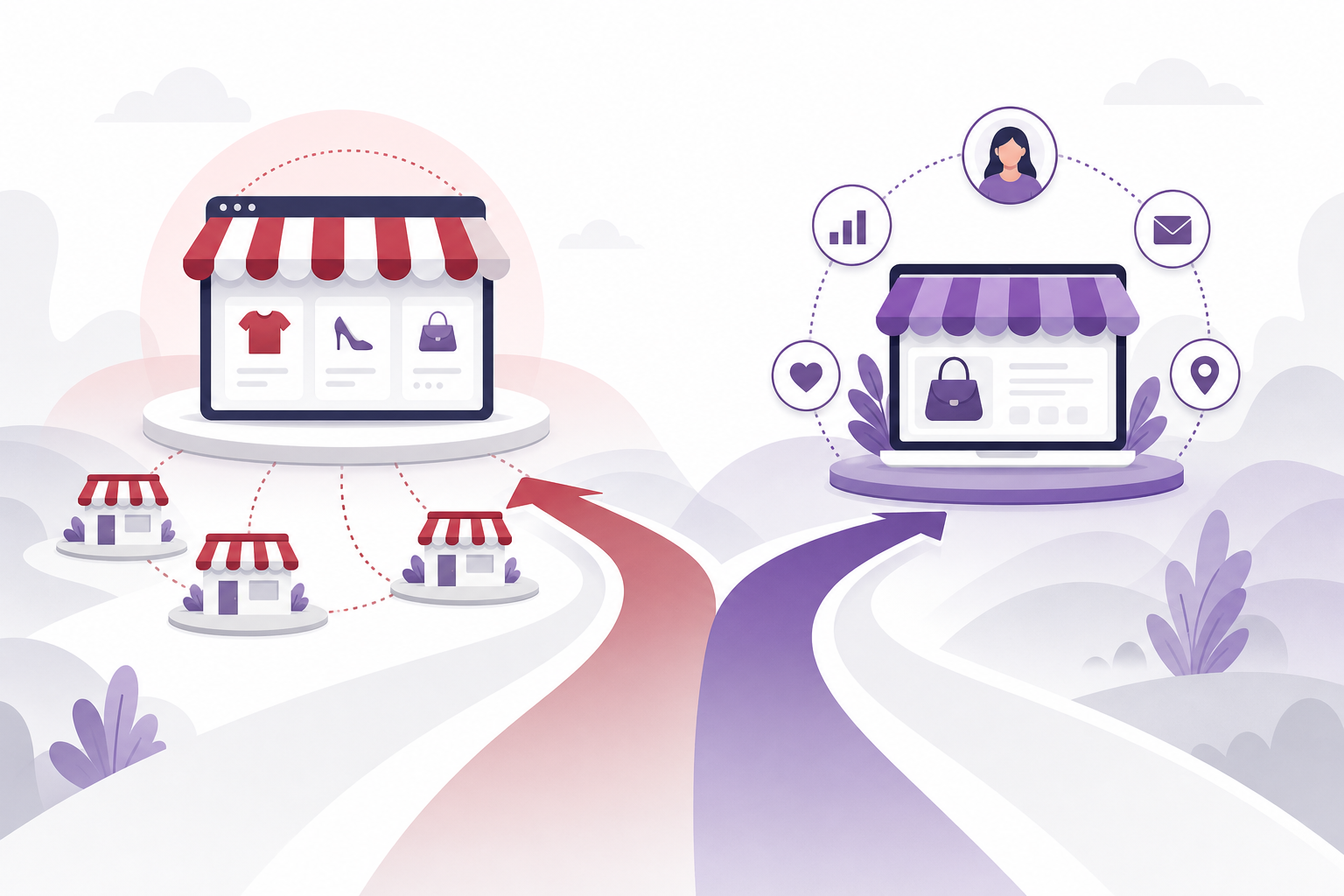
This question usually gets framed wrong from the start, because selling on a marketplace (Shopee, Lazada, TikTok Shop) and running your own website aren't mutually exclusive — most mature e-commerce businesses use both, each serving a different purpose. The real question is where to start, and when adding a standalone store starts paying for itself.
Selling on a marketplace: fast, but what's the trade-off
Marketplaces offer an undeniable early advantage: built-in traffic, payment, and shipping infrastructure with no technical investment required. The trade-off comes in three parts: a commission on every order (typically 5-10% depending on category and promotions), direct price competition with dozens of sellers on the same product listing page, and no ownership of customer data — the marketplace holds the full purchase history, so the business can't run its own remarketing to past customers.
A standalone store: what you gain control of, what you now own
A standalone store solves exactly those three weaknesses: no per-order commission (just a payment gateway fee, usually much lower), no direct price competition on a shared listing page, and full ownership of customer data for remarketing. The trade-off runs the other way: you now have to drive your own traffic (SEO, ads), build brand trust from scratch since customers don't arrive with the built-in confidence of a major marketplace, and invest upfront in the site, payments, and shipping integration.
Comparing cost over time
- Short term (0-6 months): Marketplaces are almost always cheaper since there's no infrastructure to build, making them a good way to validate whether a product sells before committing to bigger investment.
- Medium term (6-18 months): Once volume stabilizes, cumulative marketplace commissions start approaching the running cost of a standalone store, especially for thin-margin categories.
- Long term (18+ months): A standalone store usually has a clearly lower cost per order once repeat customers stabilize, since there's no commission and retaining existing customers through remarketing is far cheaper than acquiring new ones.
Signs it's time for a standalone store
- Marketplace sales have stabilized and monthly commission fees are now a meaningful chunk of operating cost.
- Repeat purchase rate is high, but there's no way to proactively reach those customers since the data isn't owned.
- The product needs a brand story longer than what a marketplace listing page allows.
- You want to run a loyalty program or custom bundles that marketplace rules don't support.
Frequently Asked Questions
Should you stop selling on marketplaces once you have your own site?
Mostly no. Marketplaces remain an efficient channel for reaching new customers thanks to built-in traffic; a standalone store's role is retention and long-term brand building. The two channels usually complement rather than replace each other.
How long does building a standalone e-commerce site take?
For core features (product catalog, cart, checkout, order management), it typically takes two to three months; longer if multiple payment gateways or in-store inventory sync are required.
Is running a standalone store more expensive than selling on a marketplace?
Fixed monthly costs (hosting, maintenance) are usually lower than cumulative commissions once volume has stabilized, but you need to add marketing spend to drive traffic yourself — a cost marketplaces don't charge separately.
If the long-term arithmetic above points towards building your own, the next question is what that platform contains and how it connects to inventory, payment and shipping. See our ecommerce platform.
About Cluvix
Cluvix Solutions builds custom enterprise software — ready-to-use products and tailor-made solutions built around your exact process.
Have a problem to discuss?
Tell us what you're dealing with. We reply within one business day.